


This is part three of a three part series looking at Scotland’s past to offer insights for Canada today as we face economic turmoil. Read part one to learn more about what happened in Scotland in the 1980s and part two to understand the similarities, differences and related risks for Canada.
Canada is facing a generational economic crisis. Governments, communities, workers, and families are struggling with the challenge. Some employers are moving their businesses and jobs out of Canada. Governments are making high stakes generational policy and financial commitments. And they are doing it while continuing to navigate trade talks that feel like riding a tandem bike on a tightrope with a wild bear while simultaneously trying to sing Opalite by Taylor Swift together.
In short, it is a moment marked by uncertainty, pressure and incredibly high stakes. We are also simultaneously juggling other crises from affordability to climate and biodiversity.
It seems our sovereignty, resilience, and prosperity are all at stake. And change is coming. The question is whether we shape it or whether we will be shaped by it.
In order to find answers, we’ve looked at Scotland’s past and Canada’s present. In this series, the big question we are now seeking to answer is: what should we do about it? What choices can we make now to avoid Scotland’s hard landing and build a more just economic transition?
It is clear there is no silver bullet or single policy solution. We also know there is a monumental challenge and a need to respond at scale. As a result, our national leaders are dedicating significant political and financial capital to respond as articulated by the recent federal budget and responses of provincial counterparts. But there is much more that needs to be done, as informed by the experience of Scotland and a comparative analysis. The scale and speed of economic transition demands a broader, deeper and more community-rooted strategy.
If Scotland’s experience shows us what happens when a country lets markets and macroeconomic policy do the work alone, then Canada’s task is clear: we need a systemic economic response that combines capital, entrepreneurship, trade and aid, and strategy at scale to respond to the challenges of the moment and immediate future.
We cannot rely solely on a set of discrete, albeit large scale, nation building projects. We also must drive economic development in communities all across the nation. This dual approach is critical: big national bets alongside thousands of community-level bets that build shared prosperity. This would be community economic development at scale as a part of nation building efforts in a time of uncertainty and crisis. In this way, they are both necessary but independently insufficient conditions to manage through this transition.
We can see the contours of that strategy below. It is important to note that it is a primarily economic strategy and excludes the necessary social policies and supports required to manage through this period of transition including wage subsidies, benefits, employment insurance, and other assistance.
1. Capital
a. Local investment: Introduce clear expectations and regulatory incentives for pension funds, insurers, banks, and other large asset owners to increase allocations to productive investment in Canadian enterprises, funds, and projects, including affordable housing. This can include mandatory disclosure of domestic and community investments, voluntary or mandatory local investment targets, and a Canadian community reinvestment framework that nudges even a 0.1% shift of our multi trillion dollar pension assets into local investments, mobilizing billions in long term nation-building capital. There are already successful examples of these kinds of approaches in Canada, including the dual mandate of CDPQ which has allowed them to invest locally in Quebec while having a positive impact and meeting and exceeding the financial return expectations of their underlying shareholders: millions of workers and pensioners.
b. Community finance: Implement a national Community Finance Strategy that scales community loan funds, Indigenous financial institutions, community bond issuers, investment cooperatives, and credit unions. This should include a federal tax credit and RRSP eligibility for community investments, a federal loan guarantee facility to de-risk private lending, federal accreditation and a public registry for Community Finance Institutions (CFIs), a Community Finance Fund for operating and investment capital, and a Canadian Community Reinvestment Act to require federally regulated financial institutions to serve underserved communities.
The model U.S. Act has mobilized hundreds of billions in community investment, including from Canadian banks operating in America. It is remarkable that the Big Five invest billions in the U.S., but report no community finance investments in Canada.
This strategy is fully articulated in a Community Finance Strategy for Canada and a mirror plan to protect Ontario through community finance. By implementing a Community Finance Strategy, the government can help put more capital to work for Canadians. We can unlock billions in domestic investment, create jobs, and build a more resilient, equitable, and sustainable economy.
c. Natural capital: Build a national natural capital investment strategy that treats ecosystems, including forests, wetlands, watersheds, agricultural lands, and urban green space, as core economic assets. This should include nature based infrastructure funds, conservation and regeneration finance vehicles, and incentives for municipalities, Indigenous Nations, and communities to restore and steward natural systems, recognizing their role in protecting communities from fires, floods, and climate shocks while generating jobs and long term economic value. Nature United has advanced this agenda with partners, as articulated through Canada’s Nature Advantage.
d. Human capital: Make generational investments in human capital through a renewed focus on post-secondary education, trades, colleges, and universities, and through large scale training and retraining programs for workers in transitioning sectors. This could include portable learning accounts, expanded apprenticeships, and targeted support for workers in manufacturing, resource industries, and services so that we do not repeat Scotland’s sink or swim deindustrialization experience but instead manages transitions with dignity and opportunity.
f. Indigenous capital and wealth: Support the growth of Indigenous economic sovereignty by capitalizing Indigenous Financial Institutions, enabling Indigenous Nation led community and sovereign wealth funds, and ensuring dedicated access to loan guarantees, equity, and patient capital for Indigenous infrastructure, enterprises, and land and water based stewardship. This should be done in Ethical Space, with Indigenous Nations leading design and governance, and with mandates for Crown corporations and federal programs to partner with Indigenous capital vehicles as core implementation partners.
g. Community housing capital: Mobilize large scale public and private capital for community housing through a national Housing Capital Strategy anchored in Build Canada Homes and designed to bring durable, long term financing into non-market and affordable housing. This strategy could include dedicated federal loan guarantees to reduce borrowing costs for community housing providers, a pooled national community housing investment fund of funds, targeted incentives for pension funds and insurers to allocate a portion of their portfolios to below-market and mixed-income housing, and standardized financial models that make it easier for municipalities and Indigenous housing organizations to access capital at scale.
Affordable housing is not only a moral imperative. It is a core component of Canada’s economic development strategy. Stable, affordable, and climate-resilient housing supports workforce retention, strengthens local economies, reduces long term public costs, and crowds in private capital when paired with guarantees, tax treatment, and predictable pipelines of projects. By treating community housing as economic infrastructure, Canada can unlock billions in investment, accelerate construction, and build resilient communities that support national prosperity.
h. Employee ownership: Promote broad-based economic resilience by accelerating employee ownership models, particularly through the Employee Ownership Trust (EOT) framework championed by Social Capital Partners. With thousands of Canadian businesses facing succession in the next decade, employee ownership offers a practical path to keep companies locally rooted, preserve jobs, and share wealth with the workers who help create it.
There have certainly been gains on this front. But there are also challenges and risks to the progress, as noted by SCP in its analysis of the recent federal budget:
Making it easier for business owners to sell to their employees, and eliminating the financial hit they would otherwise take in doing so, is one of the most important things we can do to democratize the economy and access to wealth for many Canadian workers. The government has taken significant steps over the past two years to make the employee ownership movement a reality. The government is now threatening this progress by not making permanent its soon-to-expire tax incentive. Business transitions take time to plan and the tax uncertainty that the government is creating by sunsetting the incentive after December 2026 – before the model has even had a realistic chance to take off in Canada – will lead to more businesses being sold to American private equity or competitors. The government still has time to rectify this issue, but time is running out.
Evidence from other jurisdictions shows that employee-owned firms are more productive, more resilient, and less prone to layoffs during downturns, providing a concrete strategy for shared prosperity and community wealth building as Canada navigates economic transition. Employee ownership is also a direct antidote to the kind of extractive transitions that hollowed out communities in Scotland, anchoring firms locally and sharing the economic upside with workers.
i. Wealth transfer: Explore modernizing the current tax regime with modest, well-designed wealth transfer and inheritance measures that help address inequality and mobilize capital for broad based investments in housing, community infrastructure, and climate and nature solutions. With an estimated $1 trillion in wealth expected to change hands over the next 5-10 years, we can either entrench existing inequalities or direct a small share of wealth that is transferred into new resources for targeted social, training and employment programs and generational national investments that back community finance, local enterprise, Indigenous wealth building, and shared prosperity.
2. Entrepreneurship
a. Startup and SME support: Establish a coordinated federal-provincial package to support and capitalize start-ups, small and medium sized businesses, including technical assistance programs, patient growth capital, co-investment funds, and joint tax incentives for investing in local enterprises. From Saskatchewan to BC and beyond, there are many examples of tax incentives for start-ups and small businesses across Canada that could be scaled, harmonized and made available from coast-to-coast-to-coast.
We should prioritize start-ups, small businesses, cooperatives, social enterprises, and community-based firms that are often rejected by traditional lenders but form the backbone of employment, especially (but not exclusively) in rural and Northern Canada.
b. Innovation and commercialization: Double down on serious support for innovation, not just in early stage research but in commercialization and adoption. Maintain and modernize SR&ED and the AI strategy, but pair them with patient capital, procurement programs, and demonstration projects that help Canadian firms build and keep intellectual property, scale up in Canada, and connect innovation to our industrial, climate, and community priorities.
c. Targeted industrial support: Provide targeted industrial support that avoids both blanket bailouts and hard crash landings in exposed sectors such as auto, canola, aluminum, forestry, and emerging EV and battery manufacturing. That means time bound transition funds, regional industrial strategies, and just transition pathways co-designed with workers, communities, and firms so that we manage structural change rather than allowing sudden mass unemployment and long term scarring like we saw in parts of Scotland.
d. Women entrepreneurs: Commit to a long term renewal and strengthening of the Women Entrepreneurship Strategy (WES) as a core productivity and economic development policy, not a side program. A renewed WES should be informed and led by women with tactics that could include capital tools including loan guarantees and equity funds, investment and procurement readiness supports, tax incentives and procurement targets for women led firms, data and market intelligence, and ecosystem infrastructure that links Canadian women entrepreneurs to global markets and Canada’s broader trade and industrial agenda. We can follow the lead of network organizations like the Women’s Enterprise Organizations of Canada (WEOC) on this front.
Beyond women, it is also critical that we support equity deserving entrepreneurs. We have seen signals in that regard with the renewal of the Black Entrepreneurship Program.
3. International Trade and Aid
a. Maintain trilateral trade: It seems like an almost impossible task. But it also seems like a critical mission for our nation: safeguard and modernize Canada’s trilateral trading relationship with the United States and Mexico, recognizing it as the foundation of our export economy but not our only platform. As much as possible, it seems our goal is also really to maintain our current trading position in the CUSMA review in 2026 without many major adjustments. Holding the line, maintaining rules-based trade and reducing tariff and non-tariff barriers is easier said than done. But it is clear that there are benefits for all parties to the current economic and trade relationship.
b. Global diversification: Pursue a deliberate diversification strategy that looks beyond Europe and the United States to Latin America, Africa, and Southeast Asia, with a focus on building long-term, values aligned partnerships. This should include targeted trade agreements, investment treaties, and sector missions (eg. bring back Team Canada missions), support for Canadian SMEs and funds to enter these markets, and a strong emphasis on gender equality, climate action, biodiversity, and regeneration as pillars of our trade and investment relationships.
c. Maintain international assistance: At minimum, maintain overall levels of international assistance in real terms and resist the temptation to balance the books by cutting aid. When major donors pull back, humanitarian crises worsen, democracy weakens, and the future markets Canadian firms depend on become less reliable. Maintaining aid with a sharp focus on gender equality, climate, biodiversity, and locally led development is both the right thing to do and a strategic investment in Canada’s long term economic and security interests.
d. Integrated aid trade strategy: Develop and implement an integrated global aid trade strategy that explicitly links our development, trade, climate, and investment policies. That means using a slice of the aid budget to de-risk and crowd in private capital, aligning trade promotion with impact oriented enterprises and funds, supporting visas, soft landing supports, and regulatory guidance for Global South partners, and building two way exchanges so Canadian and local investors and entrepreneurs learn and do deals together, grounded in mutual benefit. This is fully articulated in an Impact Blueprint for Canada.
e. Prioritize impact investing: Make impact investing a core tool of Canada’s global economic strategy by establishing a catalytic capital facility for regional wholesalers and diaspora bonds, building a Canadian platform that aggregates vetted emerging market impact products, and funding ecosystem and capacity building programs for intermediaries and investors in Canada and the Global South. With a relatively modest allocation, on the order of one to one and a half percent of the current aid budget, Canada could mobilize an estimated $1.5 to 2.5 billion dollars in private capital, recycle capital through repayments, and position itself as a G7 leader in integrating aid, trade, and impact investing.
4. Strategy
a. Mobilize all of Canada: Canada needs to broaden the tent and fully engage a larger set of actors. Let’s truly bring together labour, civil society, Indigenous Nations, municipalities, entrepreneurs, investors, and financial institutions around a shared economic transition agenda.
This should include a cross-party parliamentary caucus and Senate or House committee on the impact economy and economic transition, a home inside government (PCO or PMO) to mobilize the impact economy alongside Ministerial responsibility, formal partnerships with networks like Catalyst and other ecosystem organizations, and structured federal-provincial tables to ensure that policy, capital, and community action move together, not in silos.
b. Message. Canadians don’t want to hear it is going to be fine. They also don’t want just to hear that it is going to be hard. People need to participate, see and believe in the vision of the country for themselves. They need a clear path to action and a sense of how national choices connect to their everyday lives. This may be the biggest challenge and gap for the nation and our government.
c. Regeneration for community building. We can also transition our approach to the current moment from managing a crisis to mobilizing for regeneration and a regenerative future for Canada. Regeneration reframes our economic transition not as damage control but as an opportunity to rebuild stronger, healthier, and more locally rooted systems.
We can see this in the vision of regenerative investing: it is an investment approach that deliberately deploys capital to restore and create regenerative ecological and social systems, rather than merely sustaining them or minimizing harm. By integrating long-term resilience, holistic systems thinking, and equitable community engagement, regenerative investing aims to create net-positive outcomes: maintaining biodiversity, sustaining natural ecosystems, improving soil health and fertility, integrating fair labour practices, strengthening local communities and more, all while delivering financial returns simultaneously. Regenerative investing has its roots in the regenerative agriculture movement through organizations like the Rodale Institute, but this approach extends to any sector that aims for regenerative practices.
Further, this approach would seek to drive impact at scale across the country through community building, complementing large scale nation-building projects. This approach can also be seen in the stories of community-led and community-owned regeneration in Scotland.
Dundee has for decades driven culture led community regeneration anchored on universities, games, life sciences, and the V&A design museum. This effort followed the slow collapse of their jute, engineering and manufacturing base. Many challenges remain, but the community has made significant progress.
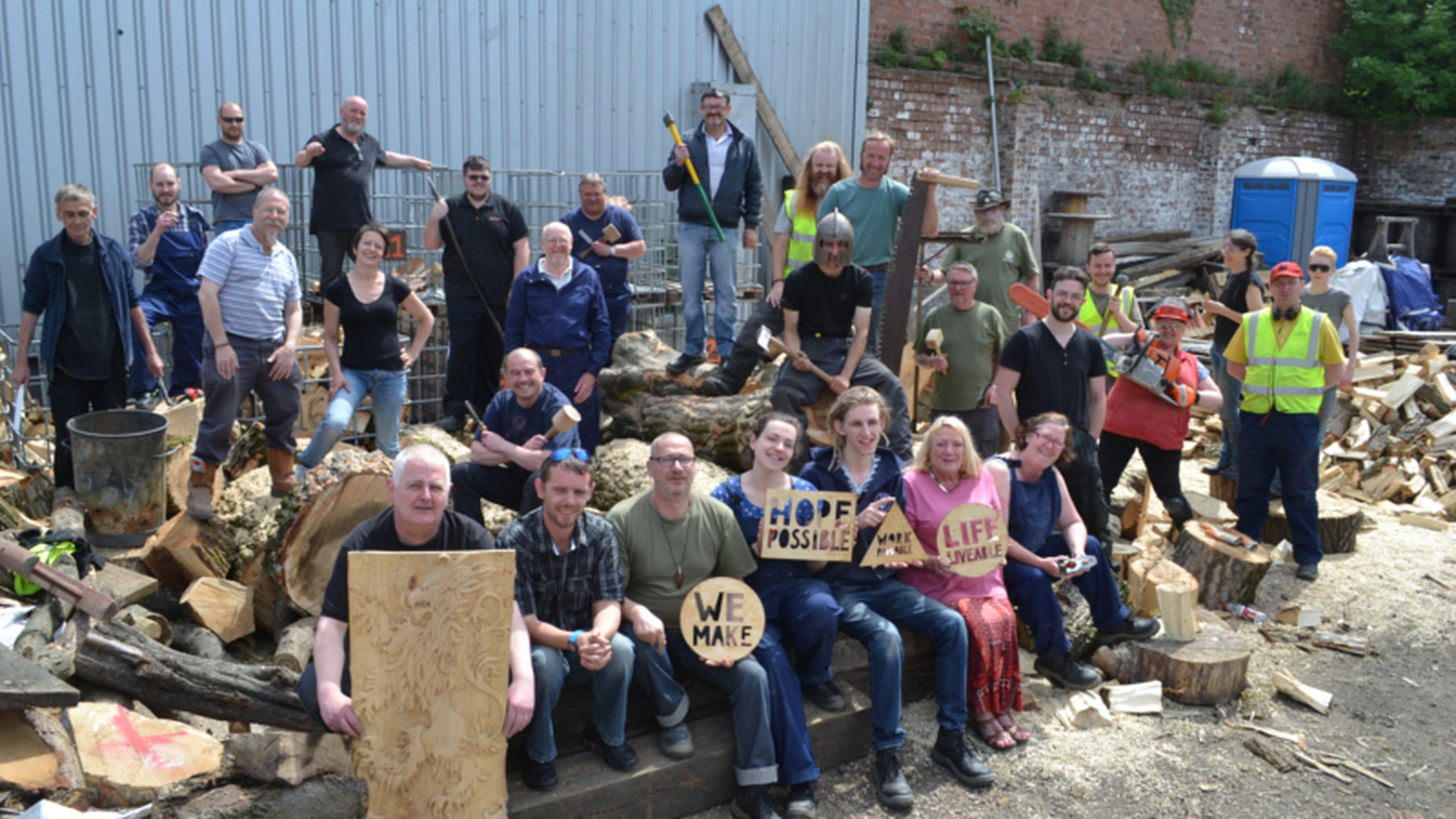
GalGael Trust is a community and heritage association working with long-term unemployed, people in recovery and others through demanding craft work including boat-building and timber, in an area of Glasgow hit by shipyard closures along the river Clyde.
Newmains Community Trust (NCT Centre) is a community-owned centre in a village once dominated by the Coltness Iron Company and other heavy industry. The Trust explicitly aims to reduce poverty, improve health and wellbeing, and operate facilities “for the benefit of the inhabitants of Newmains and district.”
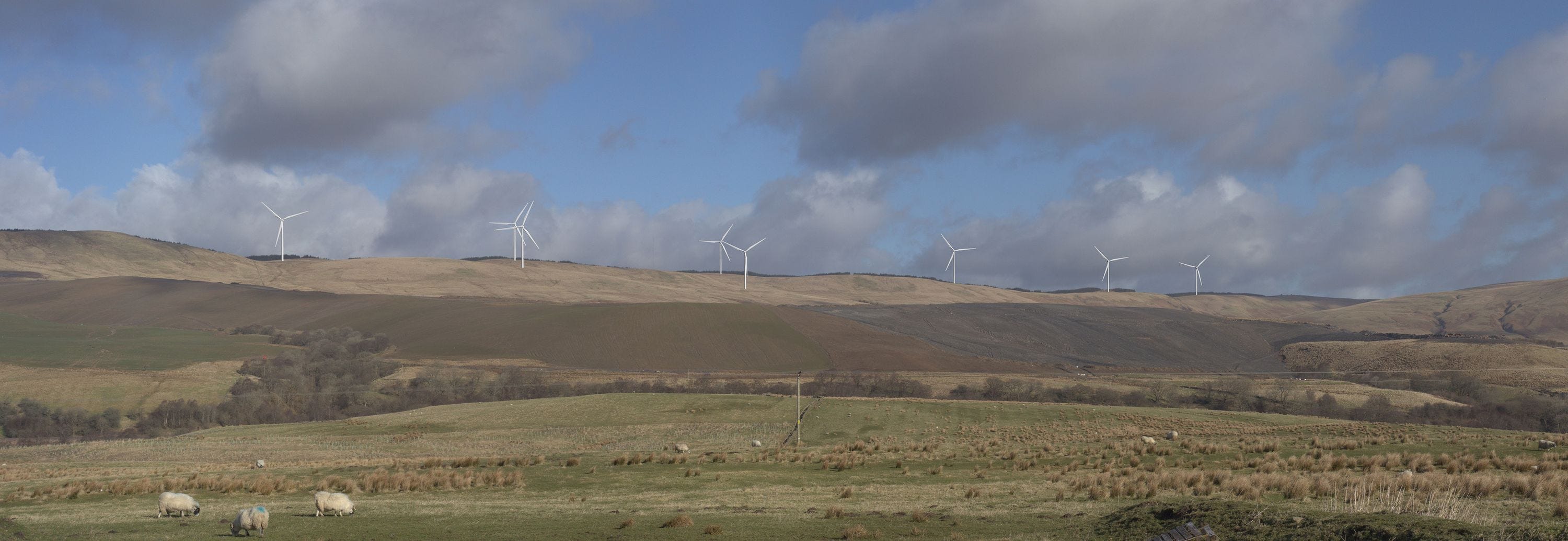
Stòras Uibhist is a community-owned estate covering roughly 92,000 acres across South Uist, Benbecula and Eriskay that has used a 6.9 MW community wind farm to generate income for local crofting, jobs and cultural projects in islands long marked by depopulation and economic fragility.
Glenmuckloch is a former opencast coal mine in Dumfries & Galloway being transformed into an energy park with a consented 400 MW pumped-storage hydro scheme and adjacent wind farm, designed to restore around 1,500 acres of ex-coal land, create hundreds of construction jobs and anchor a new clean-energy economy for the surrounding coalfield communities.
Possilpark, one of the communities hit hardest by the economic crisis of the eighties, is expecting to open a social enterprise centre this year with almost £1 million through the Scottish Government’s Regeneration Capital Grant Fund. The centre will be a hub for “innovation, collaboration and economic growth” providing support and space for 24 entrepreneurs.
There are also so many more institutions driving positive economic impact in Scotland from Social Investment Scotland to Scottish Enterprise.
The stories from Dundee to Possilpark in Scotland show that even after deep loss, places can write a new chapter. The question is what are we prepared to do for Windsor, Hamilton, Sherbrooke, Saint John, Prince George, Edmonton, Halifax, and hundreds of other communities across the country to protect against loss and recover from our own deep economic scars.
We can and we must drive this kind of regeneration in Canada. We have the capital, entrepreneurs, partners, and collective vision to make this happen. Let’s use this moment to protect and rebuild our businesses, industrial heartlands and communities on more just and regenerative terms.
The decisions we make now will determine whether Canada’s economic transition is something done to us or something built by us. Let’s choose to build in community for communities across this country.